
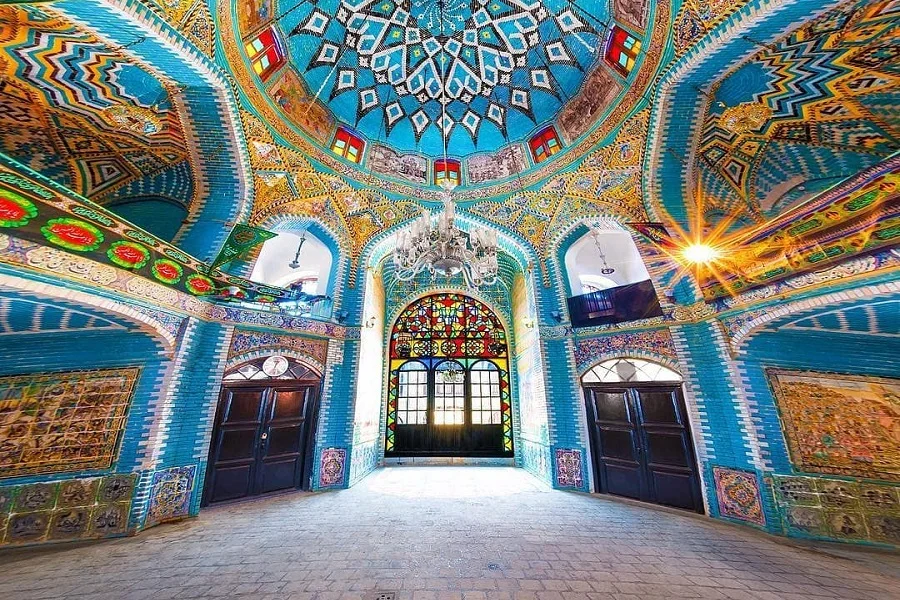
Moaven-ol Molk Tekyeh – Kermanshah Iran
Iranian and Islamic architecture is an ocean of stunning and unique patterns, displayed with remarkable elegance in Iran’s historical monuments. Religious sites across the country have gained even greater fame due to this artistry and are considered major tourist attractions. In this article, we will take a look at Tekyeh Moaven al-Molk, one of the most important surviving works from the Qajar era and among the notable sights of Kermanshah.
Tekyeh Moaven al-Molk is a historical building in the city of Kermanshah that, with its stunning architecture and decorations, showcases a complete example of Iranian art and culture. The building is located on Haddad Adel Street in Kermanshah, a neighborhood still known by its old name, Abshouran.
The construction of Tekyeh Moaven al-Molk dates back to the Qajar era, nearly 120 years ago, a period when Iranian and Islamic architecture began forming closer connections with Western architectural styles.
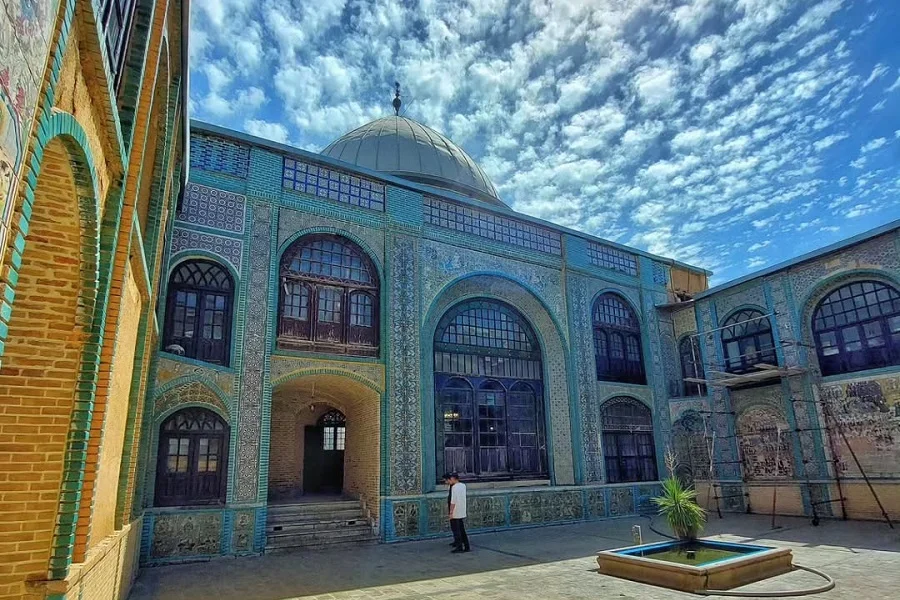
The Design of Tekyeh Moaven al-Molk
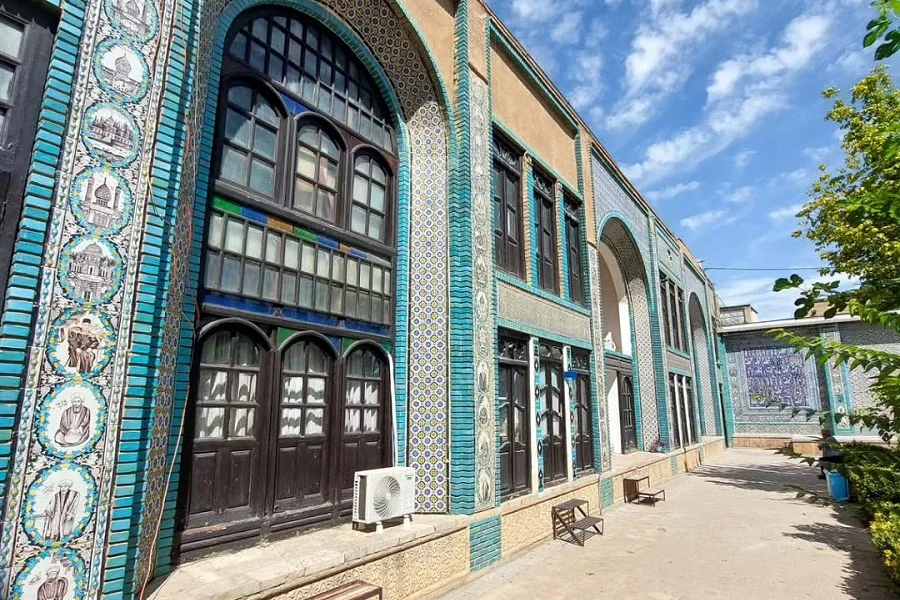
The architecture of Tekyeh Moaven al-Molk beautifully combines Islamic and traditional Persian design. The complex has three main sections: the Husseiniyeh, which is the main hall; the Zeinabiya, a space dedicated to women; and the Abbasiya, a small mosque.
As soon as you enter, the impressive murals and detailed tilework immediately catch your eye. These artworks are not just decorations; they tell meaningful stories from Persian literature and Islamic history, making your visit both visually stunning and culturally rich.
A Masterpiece of Persian Tile and Mural Art
Tekyeh Moaven al-Molk owes much of its fame to its unique and exceptional tilework, which experts have described as rare and, in some cases, unparalleled. The beautiful tiles of this complex present an unmatched display of the harmony between architecture and tile artistry. The visual richness, the diversity of colors, and the variety in tile types and dimensions make Tekyeh Moaven al-Molk one of the most exquisite and visually striking monuments remaining from the Qajar era.
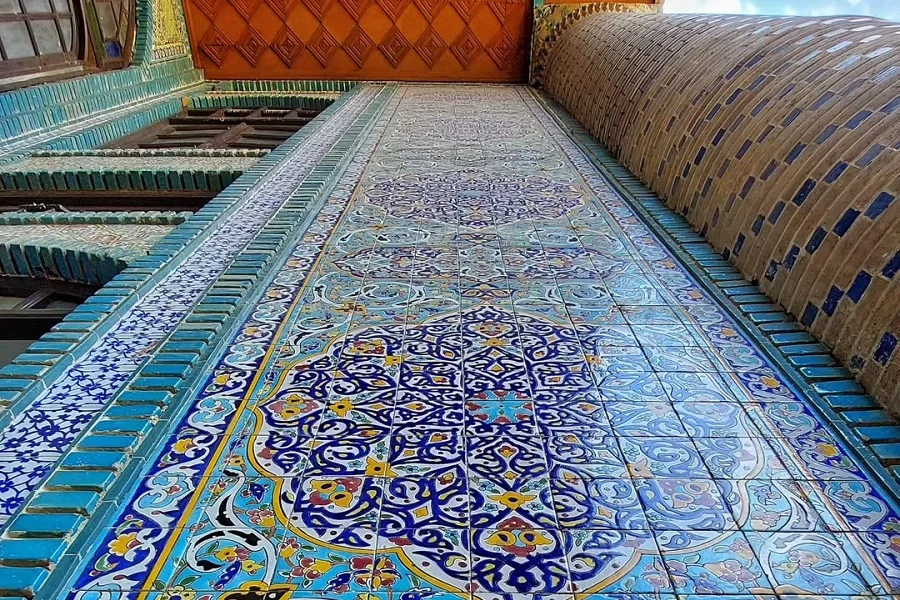
Every panel has a story to tell, showing scenes from the Shahnameh, important religious events such as Ashura, and everyday life during the Qajar era.
According to some, the creation of these exceptional tiles involved the use of 100% natural colors, and each tile reflects the artistic value of Tekyeh Moaven al-Molk. However, the building’s beautiful and admirable architecture should not be overlooked. This structure weaves together lost pieces of Iranian identity through its images and motifs, introducing them to both present and future generations.
The Meaning Behind the Artwork
Thematically, most of these motifs depict the events of Ashura and related incidents, religious narratives, Quranic stories, and Iranian national and epic tales. The tiles of the Tekyeh are categorized into two groups based on technique and execution: relief tiles and seven-color tiles.
In addition to the tiles installed on the walls, there are tiles stored in the Tekyeh’s storerooms, inscribed with the poetry of Mohtasham Kashani in white script on a blue background, complementing the main tilework of the Hussainiya.
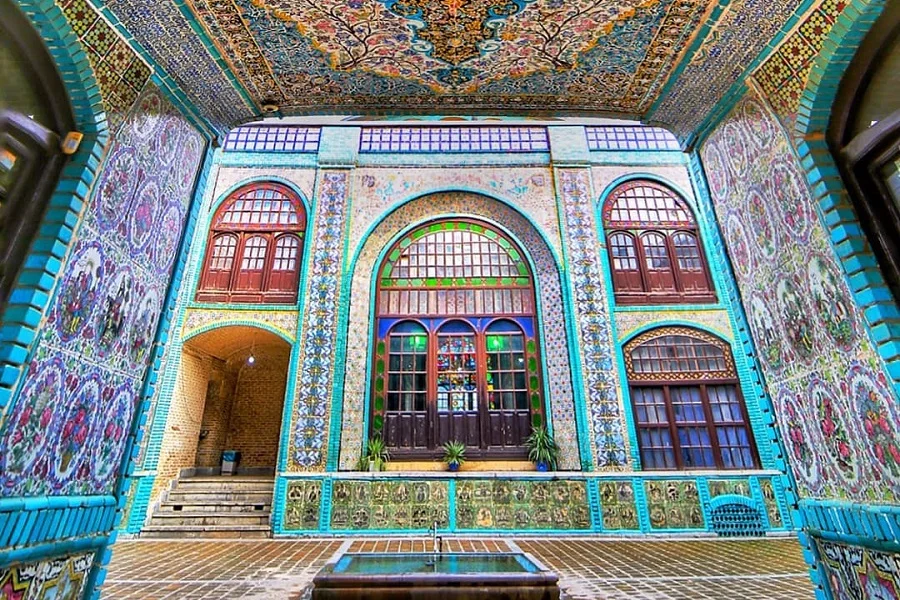
The art in Tekyeh Moaven al-Molk is rich in meaning and symbolism. Religious themes are skillfully combined with stories from Persian folklore, showing the deep connection between cultural traditions and spiritual beliefs. The color palette, mainly blues, greens, and yellows, is typical of Persian art, symbolizing divinity, growth, and wisdom. Each detail helps visitors not only admire the beauty but also understand the cultural messages woven into the designs.
A Hub of Cultural and Spiritual Life
In Iran, tekyehs have long been central to religious gatherings, especially during the Muharram mourning ceremonies. Tekyeh Moaven al-Molk, with its large halls and serene atmosphere, continues this tradition. It remains an important cultural and spiritual space, reflecting its vital role in the life of the local community.
Feeling the Spiritual Atmosphere
Visitors to Tekyeh Moaven al-Molk often notice the serene and spiritual ambiance that fills the space. More than just a historical landmark, it serves as a peaceful sanctuary, a place to find calm and reflection in the heart of busy Kermanshah.
Planning Your Visit
If you’re planning a trip to Tekyeh Moaven al-Molk, Tours of Iran offers a variety of guided tours to enhance your experience. Their expert guides provide deeper insights into the history, architecture, and art of this remarkable site, making your visit both informative and memorable.
Conclusion
Tekyeh Moaven al-Molk is a must-see destination for lovers of history, art, and culture. Its stunning architecture, meaningful artwork, and deep cultural significance make it a true gem of Iranian heritage. The space is also ideal for photography, offering countless opportunities to capture its beauty.
When visiting, wearing appropriate attire is mandatory, and all visitors should take care not to damage the walls, tiles, or artworks of the complex. Don’t miss the chance to explore this captivating site. Plan your visit with Tours of Iran for an enriching and unforgettable journey into the heart of Persian history and tradition.