
Karimkhani Citadel
One of the historical sites in Shiraz that captures the attention of every visitor is the Karim Khan Citadel. This magnificent structure, located in the heart of the city, is a remarkable monument from the Zand dynasty. It was built in 1767 AD by Karim Khan Zand, widely known as Vakil-ol-Ro’aya (the Advocate of the People). The citadel served as both the seat of government and the residence of Karim Khan, which is why it became known as Karim Khan Citadel (Arg-e Karim Khani). In 1772, it was registered on the National Heritage List of Iran.
Karim Khan Citadel: The Iconic Fortress of Shiraz
Karim Khan Citadel, also known as Karim Khan Prison, is one of the remarkable attractions of the city of poetry and literature, Shiraz.
This beautiful and majestic fortress was built in 1767 AD by Karim Khan Zand, famously known as Vakil al-Ra’aya (the Advocate of the People). After coming to power and choosing Shiraz as the capital of his rule, he decided to create an expansive square in the northern part of old Shiraz, inspired by the grand Naqsh-e Jahan Square in Isfahan. In the past, this square was called Toupkhaneh (Artillery Square). On its northern side stood Karim Khan’s administrative palace (Divan Khaneh); along the eastern side was Vakil Bazaar with several caravanserais; to the south were the Vakil Bathhouse and Vakil Mosque; and in the southwest lay a garden, while to the west were the citadel and the royal residential quarters (Andarouni).
Over time, the Karim Khan Citadel has served various purposes. Once, it was the residence and royal court of Karim Khan himself. After Shiraz was conquered by Agha Mohammad Khan Qajar, due to his hostility toward Karim Khan, he ordered the demolition of several Zand-era buildings. As a result, a number of structures from that period, including parts of the city walls, were destroyed. Fortunately, the citadel survived and remained intact. It later served as the government headquarters, used by governors and rulers of Fars Province appointed by the central government.
Karimkhan Citadel in Qaraid Era
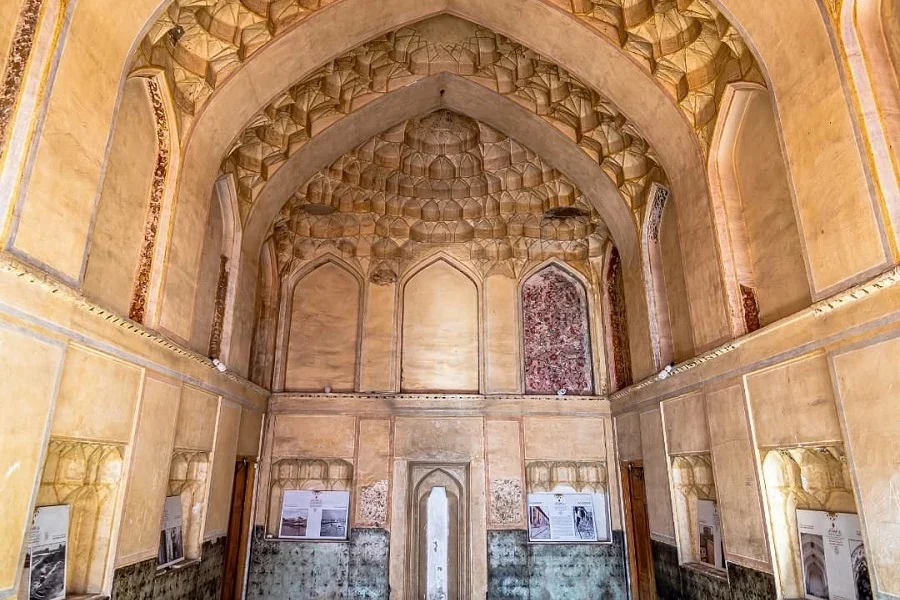
During the Qajar era, the rulers and governors made numerous alterations to the Karim Khan Citadel according to their personal tastes. For instance, they built a series of structures in the central courtyard that did not match the original architectural style of the citadel. They also covered the Zand-period paintings and replaced the decorations with ones that suited their preferences. Since plaster could not easily adhere to the previous layers, they scratched the surface of the walls with chisels, which caused significant damage to the original structure.
Karimkhan Citadel in the Pahlavi Era
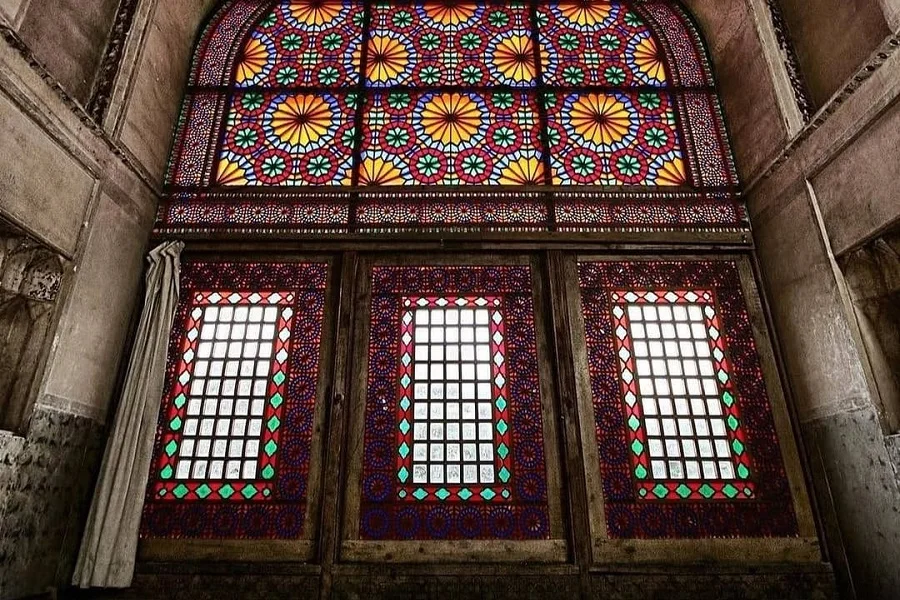
In the Pahlavi era, the citadel faced yet another chapter in its history. In 1931, with the construction of the Police Department, the building was converted into a police prison, which unfortunately caused extensive damage to the structure. To accommodate prisoners, the great halls were divided into two floors, and each section was transformed into four to six cells. The Qajar-era paintings were plastered over, and due to heating and the use of fire, the interior walls became covered with layers of soot. A 50-centimeter-thick wall was also built in front of the traditional sash windows (orsi), further altering the original layout.
In 1971, the citadel was handed over to the Department of Culture and Arts and became the headquarters of the Technical Office for the Preservation of Historical Monuments. Today, it is administered by the Ministry of Cultural Heritage and functions as the Great Museum of Fars. The Karim Khan Citadel is registered as a National Heritage Site of Iran under No. 918.
Exploring the Wonders of Karim Khan Citadel
The plan of the Karim Khan Citadel in Shiraz is rectangular and consists of two main sections: military and residential. The citadel covers an area of 13,000 square meters, with a built-up area of 4,000 square meters. Renowned artists and architects of the time participated in its construction, completing the fortress using the finest materials in a remarkably short period.
The architecture of the Karim Khan Citadel
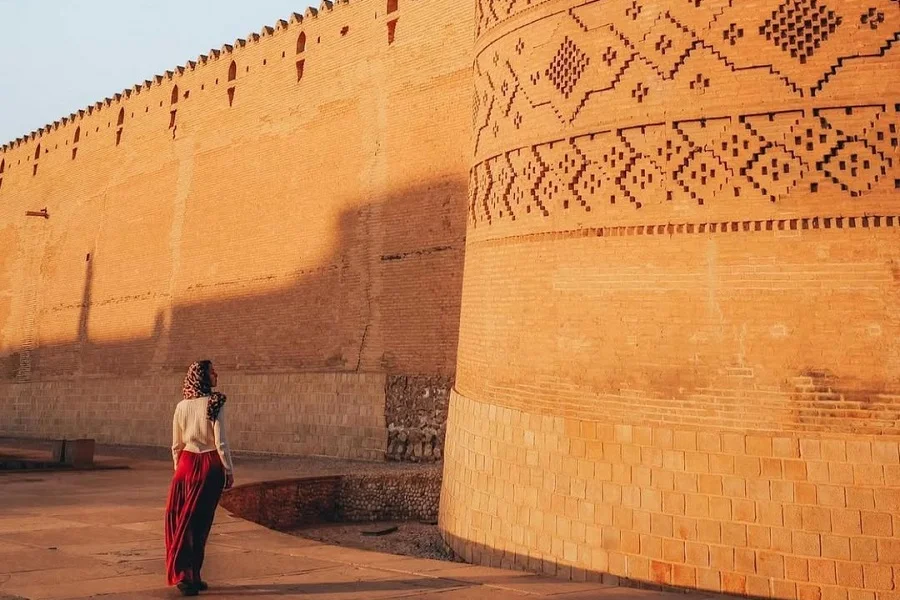
Its architecture follows the Isfahani style and is an introverted design, meaning its exterior is simple and unadorned, while the interior features delicate and beautiful decorations. Above the main entrance, there is a stunning haft-rang (seven-colored) tilework depicting the battle between Rostam and the White Demon, dating back to the Qajar period. After passing through the entrance, visitors enter a small vestibule (hashti), which leads directly into the citadel’s central courtyard.
The residential section of the Karim Khan Citadel consists of three wings: north, south, and west. Each side features a columned veranda with two stone columns. During the Qajar era, the main columns of the southern and western verandas were removed and replaced with wooden columns adorned with spiral decorations. On either side of each veranda, there is a hall, and between the halls, there are two corridors, two floors, and six rooms.
The halls of the Karim Khan Citadel feature Orsi windows, traditional wooden windows with colored glass that slide vertically. The ceilings of the halls are double-layered, with a secondary ceiling set at a distance below the main one. The inner ceiling is vaulted and decorated with stucco muqarnas, adorned with exquisite paintings and gilding inspired by the Safavid era. Materials such as gold, mercury, cinnabar, ochre, and other minerals were used in creating these intricate artworks.
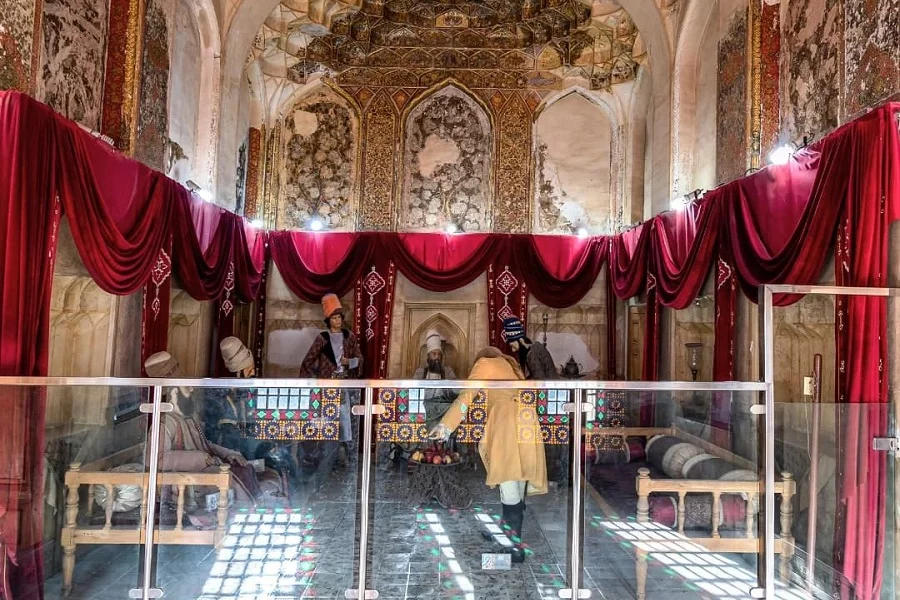
On the northern wing of the Karim Khan Citadel, there is a small private courtyard along with several small rooms separated from the main residential quarters. At the four corners of the citadel, beside the towers, there are four additional private courtyards, each featuring a central pool, which likely served functions such as service areas or kitchens. In the southeastern part of the citadel, a bathhouse from the Zand period still remains intact.
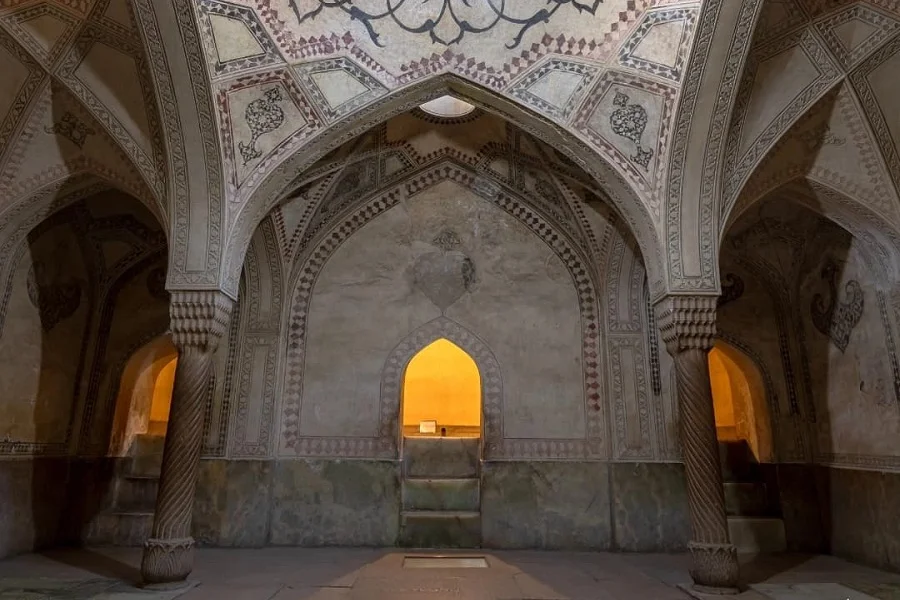
The changing room of the Karim Khan Citadel bathhouse is octagonal in shape. Its ceiling is made of a simple brick Arq-e Chin design, with beautiful lime-carved medallions (toranj) at the corners. The most remarkable feature of this bathhouse is the four monolithic stone columns inside the hot room (garmkhaneh), which are decorated with intricate designs. Beneath the floor, there are channels known as “gorbeh-ro” (cat passages), which were used to transfer heat and smoke from the hot room’s furnace to the chimneys, while simultaneously warming the bathhouse floor.
The protective Wall of Karim Khan Citadel
The security of the Karim Khan Citadel in Shiraz was ensured by its towers, walls, and a surrounding moat. The citadel walls are constructed from brick, plain and unadorned. They reach a height of 12 meters, with a thickness of 3 meters at the base and 2.8 meters at the top. The citadel also features round, three-story towers, approximately 14 meters high, located at each of its four corners.
Where to Find Karim Khan Citadel in Shiraz
The Karim Khan Citadel is one of the main attractions of Fars Province, located in the city of Shiraz. The citadel stands in the city center, right at Shahrdari (Municipality) Square.
Address: Shiraz, at the beginning of Karim Khan Zand Street, corner of Shahrdari Square.