
Yalda Night: An Ancient Iranian Tradition for the Year’s Longest Night

Yalda Night, also known as Shab-e Chelleh, is one of the oldest Iranian celebrations, observed on the last night of autumn as the longest night of the year. Yalda Night is one of the oldest Iranian traditions, bringing a special warmth and charm to family gatherings as the longest night of the year arrives. It is more than just a date on the calendar; it symbolizes the victory of light over darkness and offers a meaningful opportunity to keep cherished traditions alive.

Yalda begins at sunset on the last day of autumn and ends with sunrise on the first day of winter. Both before and after the advent of Islam, Yalda Night has held a special place in Iranian culture, always serving as a reason for relatives, near and far, to gather around a generous table. This tradition fosters deeper connections and stronger family bonds. To learn more about this celebration, don’t miss the rest of the article.

The Reason Behind the Name “Chelleh Night”

The number 40 has long held a special significance in Iranian culture. The winter season was traditionally divided into “Big Chelleh” and “Small Chelleh,” each lasting forty days. The last night of autumn was called Chelleh Night, as it marked the beginning of the Big Chelleh and the arrival of winter’s cold. Exactly 40 days later, the Sadeh Festival is celebrated, marking the end of the Big Chelleh and the start of the Small Chelleh.

The Origin of the Word “Yalda”

There are different views regarding the origin of the term “Yalda.” Some consider it a Syriac word, related to the Arabic terms “tavallod,” “wiladat,” “milad,” “yould,” and “yald,” all referring to the birth of Mithra or the sun. Others suggest that Yalda is derived from Avestan, the ancient Iranian language.
The History of Yalda Night

Yalda Night is also known by names such as Shab-e Chelleh, the Unconquered Sun, and the Birth of Mehr, all referring to the last night of autumn and the longest night of the year. The celebration of Yalda among Iranians dates back over seven thousand years. In fact, our ancestors had already recognized that the first night of winter is the longest night of the year. Although throughout Iranian history no government ever required this celebration, Iranians have cherished and preserved Yalda Night since ancient times.

In ancient times, people were mainly engaged in farming and herding, shaping their lives in harmony with nature. As a result, seasonal changes and the length of days and nights had a significant impact on their daily lives. For this reason, light, warmth, and longer days were seen as positive and desirable, while winter, cold weather, and long nights were viewed as less favorable.

In Mithraic belief, the last night of autumn is regarded as the birth of the sun, a moment when Mithra, in the depth of a long, cold, and dark night, emerges from a cave in the Alborz Mountains, bringing forth the life-giving light of the sun. Shab-e Chelleh is therefore considered the night of the sun’s birth and appearance.

In the book From Myth to History, quoting Dr. Mehrdad Bahar:

“Yalda Night is not the birth of Mithra; it is the birth of the sun. Mithra and the sun are distinct from each other.”

According to the calendar of ancient Iranians, Chelleh coincides with the birth of the sun. Although the sun and Mithra were closely connected, they are not the same. After Iranians embraced Zoroastrianism, the customs of the Mithraic tradition became integrated into Zoroastrian practices.

According to historical records, Zoroastrians considered the first day of winter as “Khord Rooz” or Sun Day, and the celebration held on this day was called “Navad Rooz” (Ninety Days), since the period from Yalda Night to Nowruz, the Persian New Year, lasted 90 days.

According to Masoudi’s Law, the first day of winter was called “Khoreh Rooz” or “Khorram Rooz”, and it was dedicated to Ahura Mazda. Even after Zoroastrianism became the official religion during the Sassanian era, the significance of Mithraic traditions remained prominent in both governmental institutions and daily life, a fact clearly reflected in the art and reliefs left from that period.

According to an ancient Mithraic tradition, on the first day of winter, Iranian kings would relinquish their throne, don a white robe, and go out into the open fields to sit on a white carpet. On this day, palace guards and servants were given freedom, living like ordinary people.

In this way, everyone, from the king to ordinary people, held an equal status, and no one had the right to give orders to others. Moreover, on this day, shedding blood, even that of sheep or chickens, as well as fighting, was strictly forbidden. Enemy forces aware of this tradition would temporarily cease hostilities, which in some cases even led to extended periods of peace.

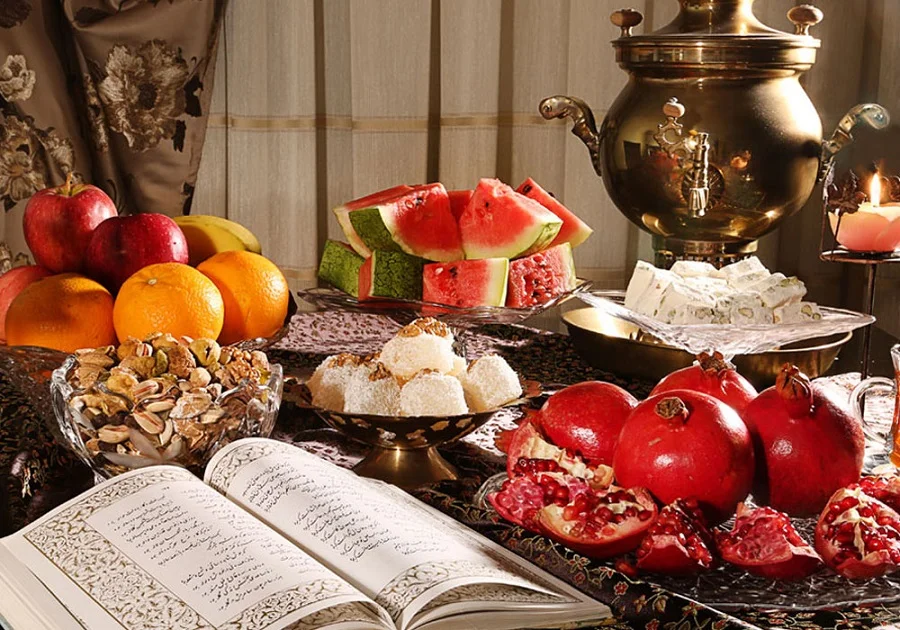
In ancient Iran, people would gather to honor Ahura Mazda and Mithra, enjoying food, drink, and celebration together. They would set a special table called “Mizd” (meaning hospitality), which included seasonal fruits, dried fruits, and nuts, known in Zoroastrian terms as “Lork.” Ritual items such as incense holders, fire bowls, and perfume containers were also placed on this table.

Yalda Night Registered with UNESCO

In 2022, during the 17th session of the Committee for the Safeguarding of the Intangible Cultural Heritage, Yalda Night was officially recognized as an intangible cultural heritage of Iran and Afghanistan. In this ceremony, Yalda Night was described as:
Yalda is a historic celebration in which participants honor the increasing light of the sun, warmth, and vitality of life. The winter solstice in the Northern Hemisphere corresponds to the 1st of Dey in the Iranian calendar, marking the beginning of longer days in this region.

When Is Yalda Night?

On the first day of winter each year, the Earth reaches the winter solstice, resulting in the shortest day and longest night of the year in the Northern Hemisphere, and the longest day in the Southern Hemisphere. Interestingly, the length of the night is not the same everywhere; for example, at the equator, day and night are equal, and the closer you go to the poles, the longer Yalda Night becomes. In fact, the duration of Yalda Night depends on geographic location.

On Yalda Night, the sun reaches its farthest point from the celestial equator, resulting in the longest night of the year, although this night is only slightly longer by about a minute compared to the other nights.

Yalda Night Traditions

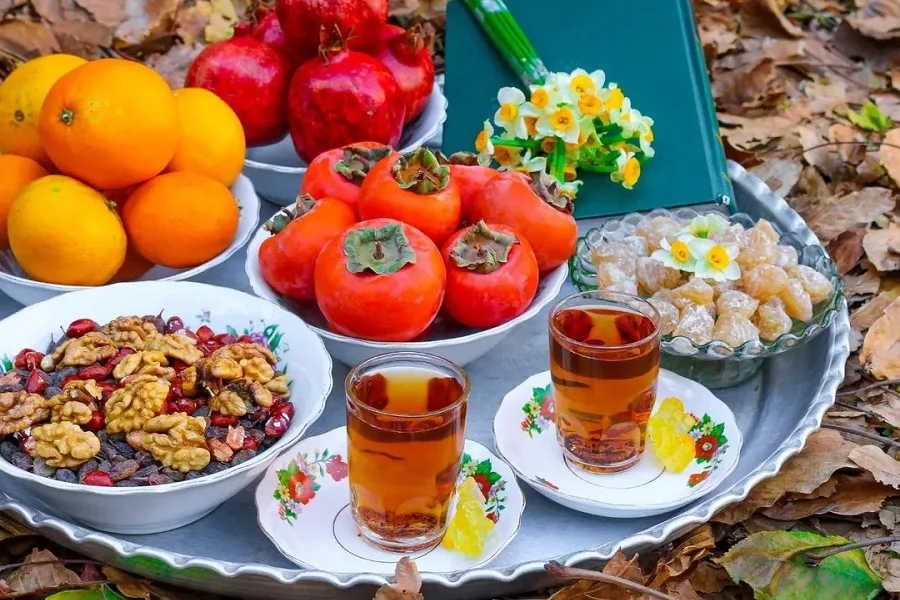
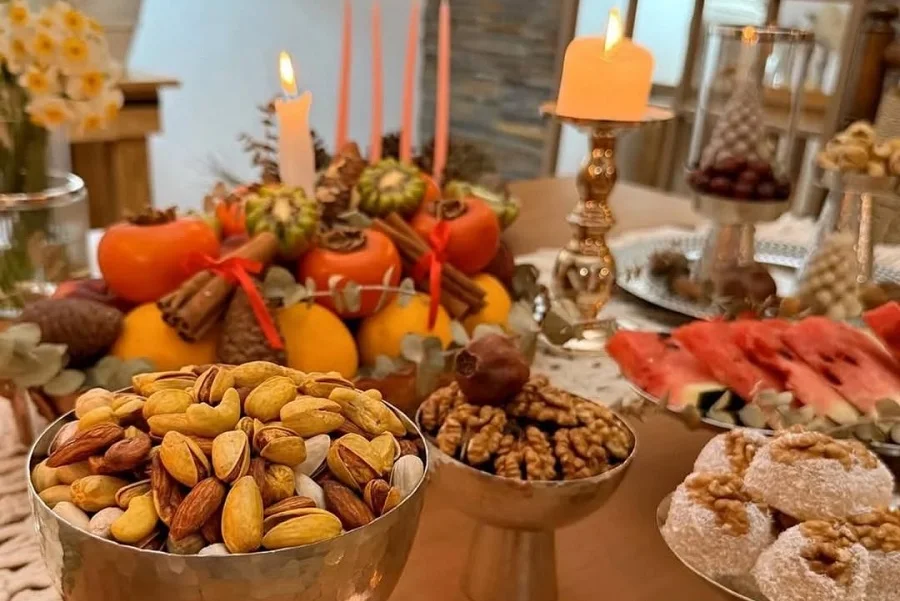
Like many Iranian celebrations, Yalda Night is observed through family gatherings. A special table with traditional foods is prepared for the occasion. In most regions, these treats are called “Shab-Chareh” and usually include seven types of nuts and seven kinds of fruit. However, sometimes the number of items exceeds seven and may also include various traditional and modern sweets.

A few days before Yalda Night, the streets and markets are filled with excitement and energy, as people prepare for this historic celebration. Numerous street vendors sell traditional Yalda treats throughout the city. The festival is usually hosted by the elders, making it a truly memorable experience. The most important part of the celebration is the family and relative gatherings, where everyone spends the longest night of the year enjoying conversation, laughter, and togetherness.

Poetry and Storytelling

Reciting poetry and storytelling are among the most cherished parts of Yalda Night, though they are becoming less common today. In the past, elders would entertain guests by sharing stories from the Shahnameh, imparting moral lessons, and reciting poetry, creating a warm and engaging atmosphere.

Divination with Hafez

The Divan of Hafez holds a special place on the Yalda table. During gatherings, guests offer a moment of respect to Hafez’s spirit and perform divination using his poetry to gain insight into their future. Another traditional practice involved choosing a walnut and cracking it open; whether the walnut was hollow or full would serve as a sign or omen.

Eating Yalda Nuts

The most popular and delicious part of Yalda Night is enjoying the festive nuts, usually a mix of various dried fruits and nuts, which are not only tasty but also nutritious.

Eating Yalda Fruits

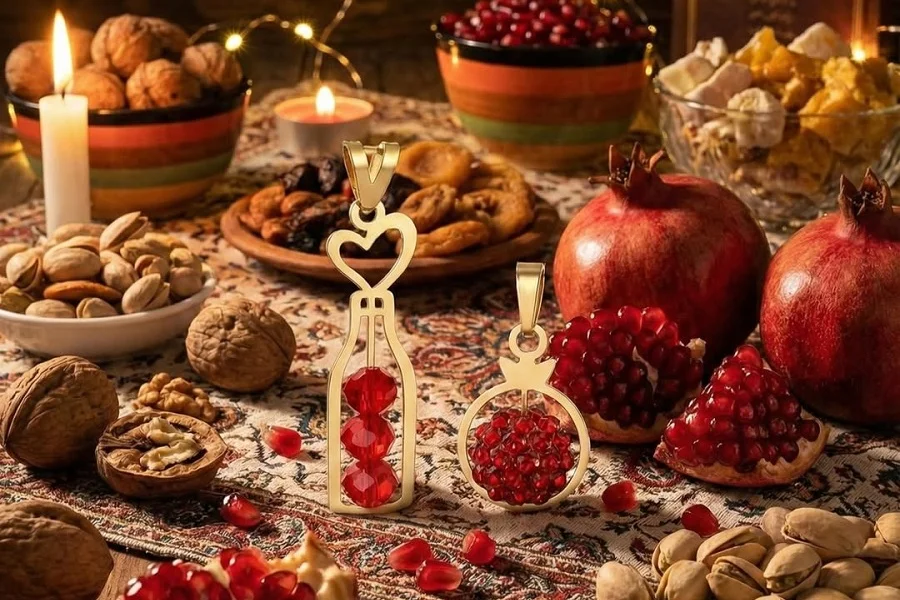
Iranians don’t stop at nuts on Yalda Night; a variety of fruits also adorn the festive table. One of the most iconic fruits is watermelon, considered essential for completing the celebration. It is believed that eating a fruit symbolizing summer will help ward off the cold of winter. Pomegranate, symbolizing joy and fertility, is another staple of Yalda Night. This juicy and nutritious fruit not only promotes blood health but also provides energy and vitality thanks to its vitamin C and other beneficial properties. Other fruits like persimmons, medlar, apples, and oranges are also part of the seasonal spread.

In Iranian culture, the color red has a history spanning over five thousand years. Before settling in the Iranian Plateau, Iranians came from regions where winter lasted ten months and summer only two, making the warmth of the sun extremely valuable to them. As a result, anything related to the sun, such as the reddish-purple of dawn, was highly revered. The significance of the color red on Yalda Night is rooted in this belief, which is reflected in the vibrant red of pomegranates and watermelons.

Yalda Night Meals

Since Yalda Night is an ideal occasion for reuniting with relatives, everyone puts great effort into preparing a delicious and hearty dinner. The dishes served vary by region and can include Sabzi Polo with fish, Zereshk Polo, Pomegranate Rice, Shirazi Cabbage Rice, and more, enhancing the joy of gathering together.

“Shab-e Chelleh” Gifts for Newlyweds

On the last day of Azar (the ninth month of the Iranian calendar), families of newlyweds prepare special Shab-e Chelleh gifts for one another. The tradition varies by region and is carried out in unique ways. Historically, it was practiced because engaged couples could only meet on special occasions, such as Yalda Night.

The groom’s family would bring Shab-e Chelleh gifts to the bride’s family, seeking permission for her to attend the celebration at their home. Typical gifts include sugar cones, various sweets, a bolt of fabric, handbags and shoes, winter clothing for the bride, a piece of gold, nuts and dried fruits, fruit, chicken, meat, and more. The exact items often vary depending on the family’s location and local customs.

Lighting the Fire

In the beliefs of ancient Iranians, lighting a fire symbolized light and the sun. Some would light fires to ward off evil and darkness, ensuring warmth and protection throughout the long night.

Now that you are familiar with Yalda Night and its traditions, we invite you to share your memories or thoughts about this special celebration with us.

How useful was this post?

Click on a star to rate it!

Average rating 0 / 5. Vote count: 0

No votes so far! Be the first to rate this post.

About the Author

mohammad

Welcome, Travelers! This is Mo, the person behind the stories, tips, and insights you’ll find here about Iran. From well-known highlights to hidden corners, Mo shares practical advice and local knowledge to make every trip smoother and more enjoyable. If you’re planning your first visit or coming back for another adventure, this blog is here to help you experience Iran in the best way possible.

Leave a Reply

Your email address will not be published. Required fields are marked *

Write a review

We use essential cookies to make our site work. With your consent, we may also use non-essential cookies to improve user experience and analyze website traffic. By clicking “Accept,” you agree to our website’s cookie use as described in our Cookie Policy.”In addition, you can change or withdraw your consent at any time by clicking “Cookie Settings” under the Article 3.2 of “Cookie Policy”.

How useful was this post?

Click on a star to rate it!

Average rating 0 / 5. Vote count: 0

No votes so far! Be the first to rate this post.